

Have you ever gone to bed feeling tired, only to wake up because your shoulder, hip or another part of your body feels uncomfortable?
Sometimes, the problem isn’t that you haven’t slept long enough. It may be that your mattress isn’t distributing your body weight in a way that feels comfortable for you.
This is where pressure points become important.
When you lie down, different parts of your body come into contact with the mattress. Depending on your sleeping position, areas such as your shoulders, hips, knees and heels can experience more pressure than others.
A mattress that allows your body to settle comfortably into its surface may help reduce the sensation of pressure in these areas.
That’s one reason soft memory foam mattresses are often considered by people looking for a more cushioned sleeping experience.
But does a softer memory foam mattress actually reduce pressure points?
The answer is: it can, depending on your body, sleeping position, mattress construction and personal comfort preference.
Softness alone isn’t the whole story.
Let’s understand how memory foam works, why pressure points develop, and what you should consider before choosing a soft memory foam mattress.
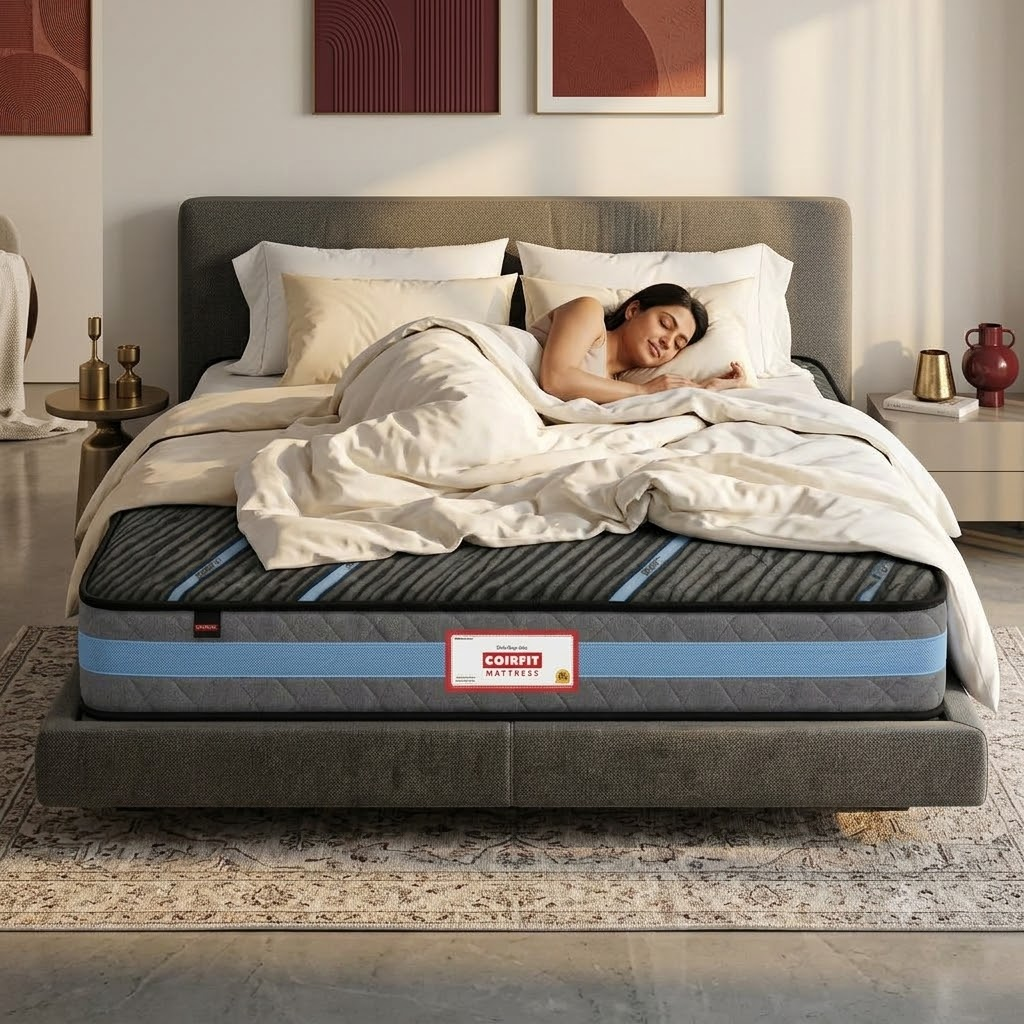
What Are Pressure Points During Sleep?
A pressure point is an area where your body experiences increased pressure against the sleeping surface.
When you’re standing or sitting, your body weight is distributed differently.
When you lie down, the areas that come into contact with the mattress can carry more concentrated pressure.
For example, a side sleeper may experience more contact around the:
- Shoulders
- Hips
- Knees
A back sleeper may experience more pressure around areas such as the:
- Shoulders
- Upper back
- Lower back
- Heels
The experience is different for everyone because body shape, weight distribution and sleeping position are different.
This is why the same mattress can feel wonderfully comfortable to one person and noticeably firm to another.
How Does Memory Foam Work?
Memory foam is a type of foam designed to respond to body heat and pressure.
When you lie on a memory foam mattress, the material can gradually contour around the areas where your body applies pressure.
Instead of simply pushing your body upward like a very firm surface, memory foam can allow you to sink into the mattress to a certain degree.
That contouring sensation is one of the reasons people choose memory foam.
The idea is simple:
Instead of your body adapting entirely to the mattress, the mattress adapts to the shape of your body.
The amount of contouring you experience depends on the memory foam itself, its density, thickness, firmness and the layers beneath it.
So, two memory foam mattresses can feel quite different even though they both use memory foam.
Can a Soft Memory Foam Mattress Reduce Pressure Points?
For some sleepers, yes.
A soft memory foam surface can allow areas such as the shoulders and hips to sink gradually into the mattress.
This can increase the area over which body weight is distributed, potentially reducing concentrated pressure and making the sleeping surface feel more comfortable.
This can be particularly relevant for side sleepers.
Imagine lying on a very firm, flat surface.
Your shoulders and hips may press more directly against it because those areas naturally extend farther from the rest of your body.
Now imagine a surface that gives slightly under those areas.
The mattress can accommodate the shape of your body rather than forcing your body to remain on a completely flat plane.
That’s the basic comfort principle behind pressure-relieving memory foam.
However, softer isn’t automatically better.
If a mattress is too soft for your body, you may sink more deeply than is comfortable.
That can make movement harder and may leave you feeling unsupported.
The goal is not maximum softness.
The goal is comfortable cushioning with appropriate support.
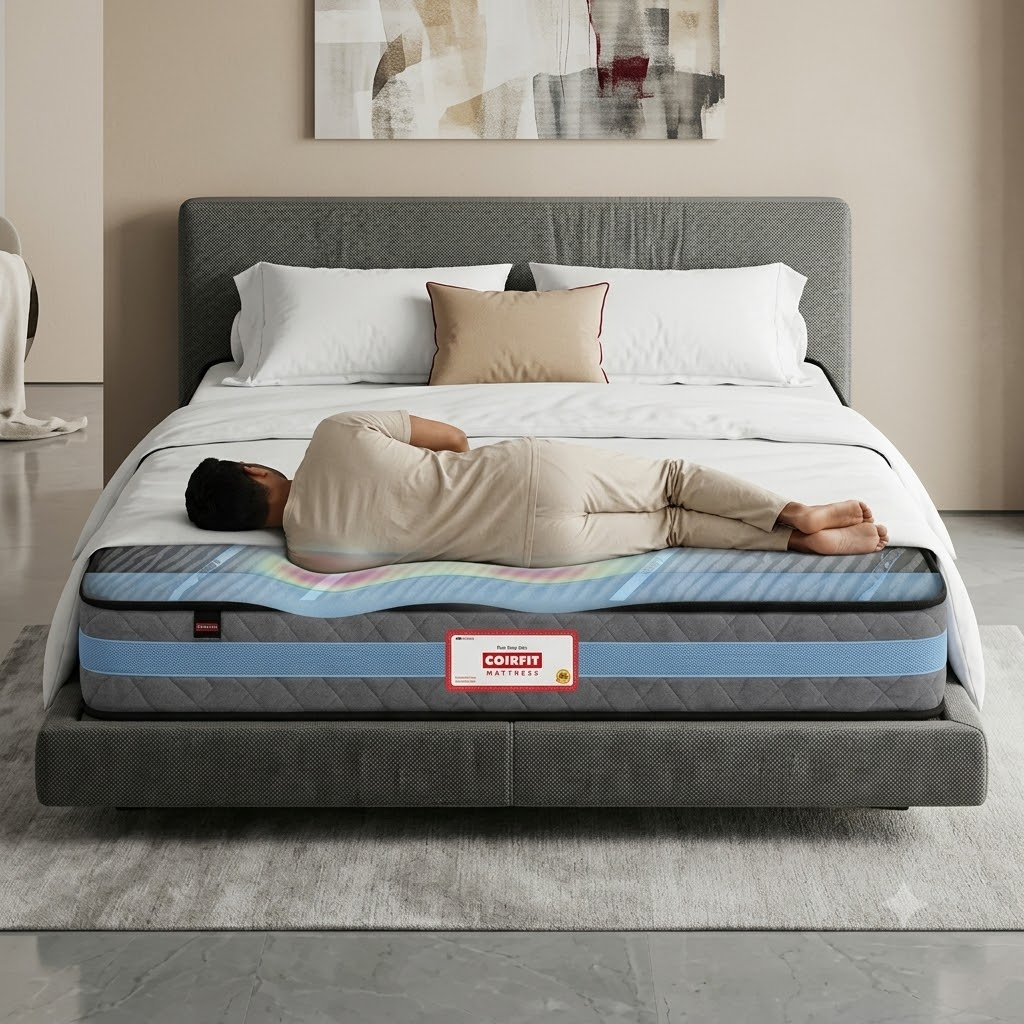
Why Side Sleepers Often Think About Pressure Relief
Side sleeping is one of the positions where pressure distribution can become particularly noticeable.
When you sleep on your side, your shoulder and hip can carry a greater share of the contact between your body and the mattress.
If the mattress surface is very firm, these areas may experience a concentrated sensation of pressure.
A mattress with appropriate cushioning can allow the shoulder and hip to settle into the surface more comfortably.
This is where memory foam can be useful.
Its ability to contour around the body can create a more enveloping feel than some traditional mattress surfaces.
For side sleepers who enjoy a softer sleeping experience, this can make memory foam an appealing option.
But there is an important consideration:
Your body should feel cushioned, not swallowed by the mattress.
If you have difficulty turning or getting out of bed because you sink excessively, the mattress may be too soft for your preference.
What About Back Sleepers?
Back sleepers have a different set of comfort requirements.
When you’re lying on your back, you generally want the mattress to provide a stable surface while still offering enough cushioning to feel comfortable.
A very soft mattress may allow the body to sink more deeply.
For some people, that feels wonderfully comfortable.
For others, it may feel less supportive.
That’s why a memory foam mattress shouldn’t be chosen based solely on the word “soft.”
Look at the complete construction.
The firmness of the memory foam, the thickness of the comfort layer and the support provided underneath all contribute to how the mattress feels.
And What About Stomach Sleepers?
Stomach sleepers often have different preferences again.
Because the front of the body rests against the mattress, a sleeping surface that allows excessive sinking may not feel comfortable.
Some stomach sleepers prefer a more supportive and stable surface.
If you’re primarily a stomach sleeper, don’t automatically assume that a very soft memory foam mattress will provide the best experience simply because it offers more cushioning.
Your sleeping position should be one of the first things you consider when choosing mattress firmness.
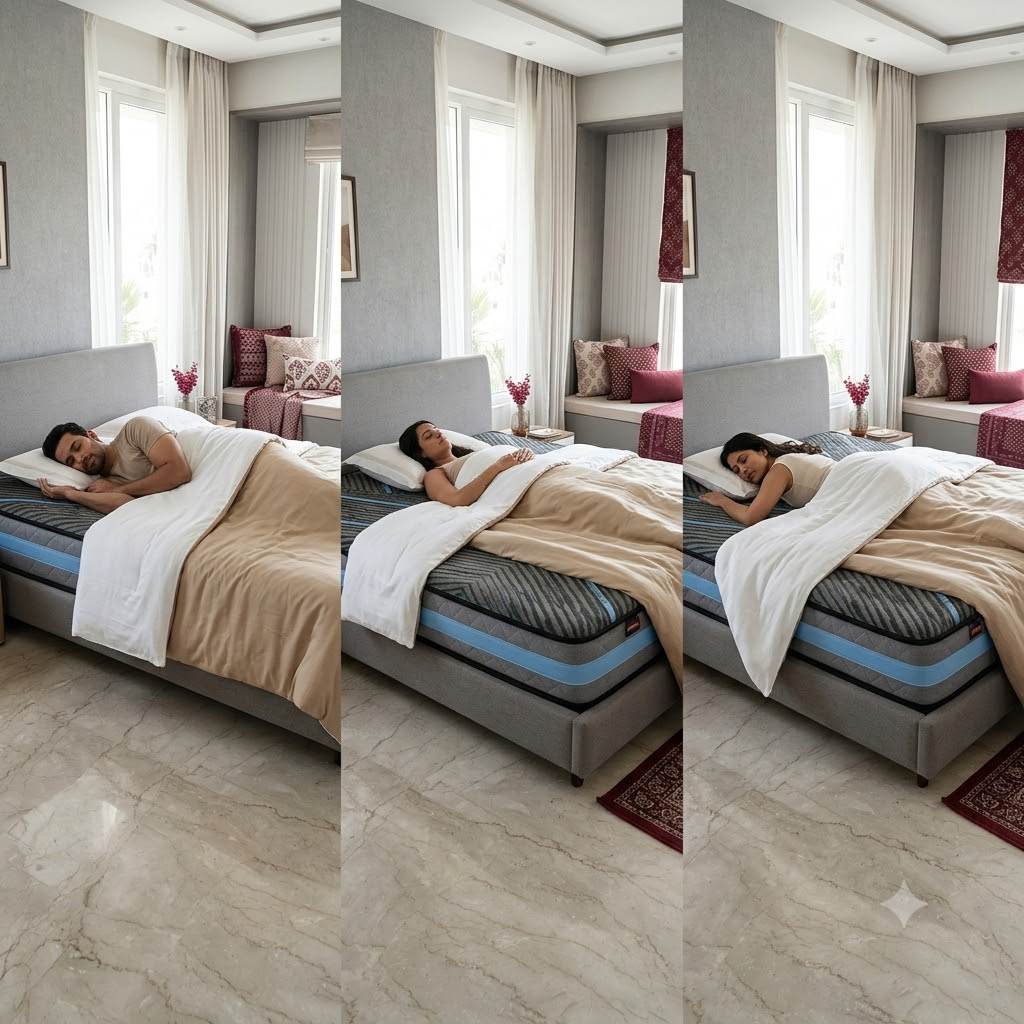
Soft Doesn’t Always Mean Pressure-Relieving
This is one of the most important things to understand before buying a mattress.
You might assume:
Softer mattress = more pressure relief.
But it’s not quite that simple.
Pressure relief depends on how the mattress interacts with your body.
A mattress can feel soft but still lack the right underlying support.
Likewise, a moderately firm mattress can provide excellent pressure distribution if its materials and construction are designed appropriately.
Your body weight also matters.
A lighter sleeper may not compress the mattress as much as a heavier sleeper.
That means the same mattress can feel significantly different to two people.
This is why mattress shopping should always consider the person—not just the material.
What Makes Memory Foam Comfortable?
Memory foam can provide several characteristics that appeal to people looking for a cushioned sleeping experience.
Contouring
Memory foam can conform to the body’s shape under pressure, creating a more personalised feel.
Cushioning
The foam can provide a softer surface layer that feels comfortable around pressure-sensitive areas.
Reduced Surface Harshness
Compared with a very rigid sleeping surface, memory foam can create a gentler transition between your body and the mattress.
Body-Hugging Feel
Some people enjoy the feeling of settling gradually into their mattress rather than lying directly on top of it.
This is one of the defining characteristics of memory foam.
What Should You Look for in a Soft Memory Foam Mattress?
If pressure relief is one of your priorities, don’t stop at the word “soft.”
Consider the following.
1. Memory Foam Quality
Different memory foams can have different densities, responsiveness and durability.
The quality of the material influences how it feels and performs.
2. Thickness of the Comfort Layer
A very thin layer of memory foam may feel different from a mattress with a more substantial comfort layer.
3. Support Beneath the Memory Foam
The layers underneath the memory foam matter.
A comfortable mattress generally needs both cushioning and a stable foundation.
4. Firmness
Think about how much you actually want to sink into your mattress.
5. Sleeping Position
Your preferred sleeping position should influence your choice.
6. Body Weight
Your weight affects how much the mattress compresses beneath you.
7. Personal Preference
Some people love the hugging feel of memory foam.
Others prefer a more responsive mattress where they feel more “on top” of the surface.
Neither preference is wrong.
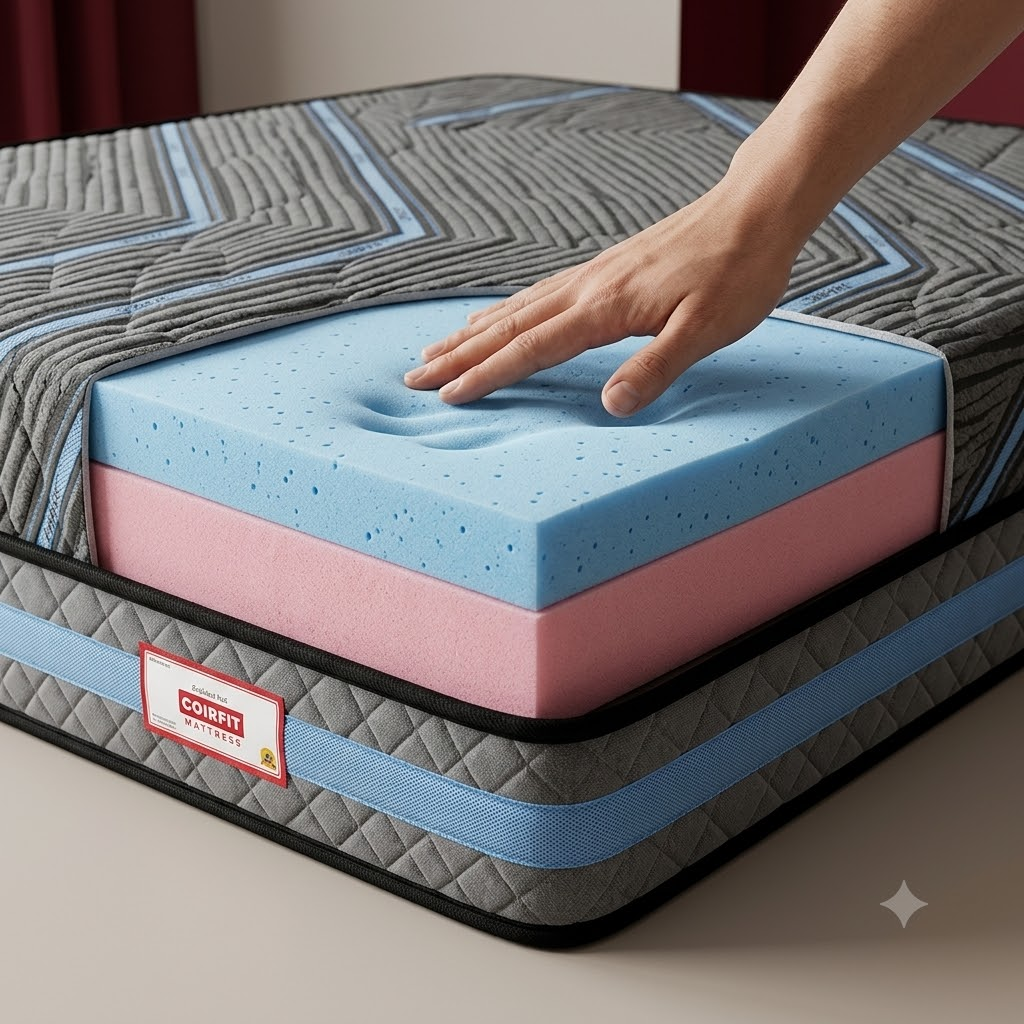
Can Memory Foam Be Too Soft?
Absolutely.
A mattress that is too soft can allow your body to sink more deeply than you prefer.
You may find it difficult to turn over, get out of bed or maintain a comfortable sleeping position.
For some sleepers, excessive sinking can also create a sensation of insufficient support.
This is why the phrase “pressure relief” shouldn’t be confused with “maximum softness.”
Good mattress design is about balance.
You want enough cushioning to feel comfortable around pressure-sensitive areas.
But you also want enough underlying support to prevent excessive sinking.
That’s why mattress construction matters so much.
Does Body Weight Affect Pressure Relief?
Yes.
Your body weight changes how much pressure you place on the mattress and how deeply you interact with its surface.
A mattress that feels medium-soft to one person may feel considerably softer to another.
Similarly, a mattress that feels comfortably cushioning to one sleeper may feel relatively firm to someone else.
This is particularly important when choosing memory foam.
Rather than relying entirely on a generic firmness label, consider how the mattress is likely to respond to your body.
If possible, use a mattress trial period when one is offered and carefully follow the manufacturer’s terms.
What About Couples With Different Preferences?
This is where mattress selection can become slightly more complicated.
One person may love a soft, contouring memory foam feel.
The other may prefer something firmer and more responsive.
There isn’t always a perfect one-word answer.
Couples should consider:
- Both sleepers’ preferred firmness
- Sleeping positions
- Body weights
- How much each person moves during sleep
- Whether either person prefers a contouring or responsive feel
In some cases, a mattress with balanced construction can offer a useful middle ground.
The important thing is to avoid choosing a mattress based entirely on one person’s preference when two people will be sleeping on it every night.
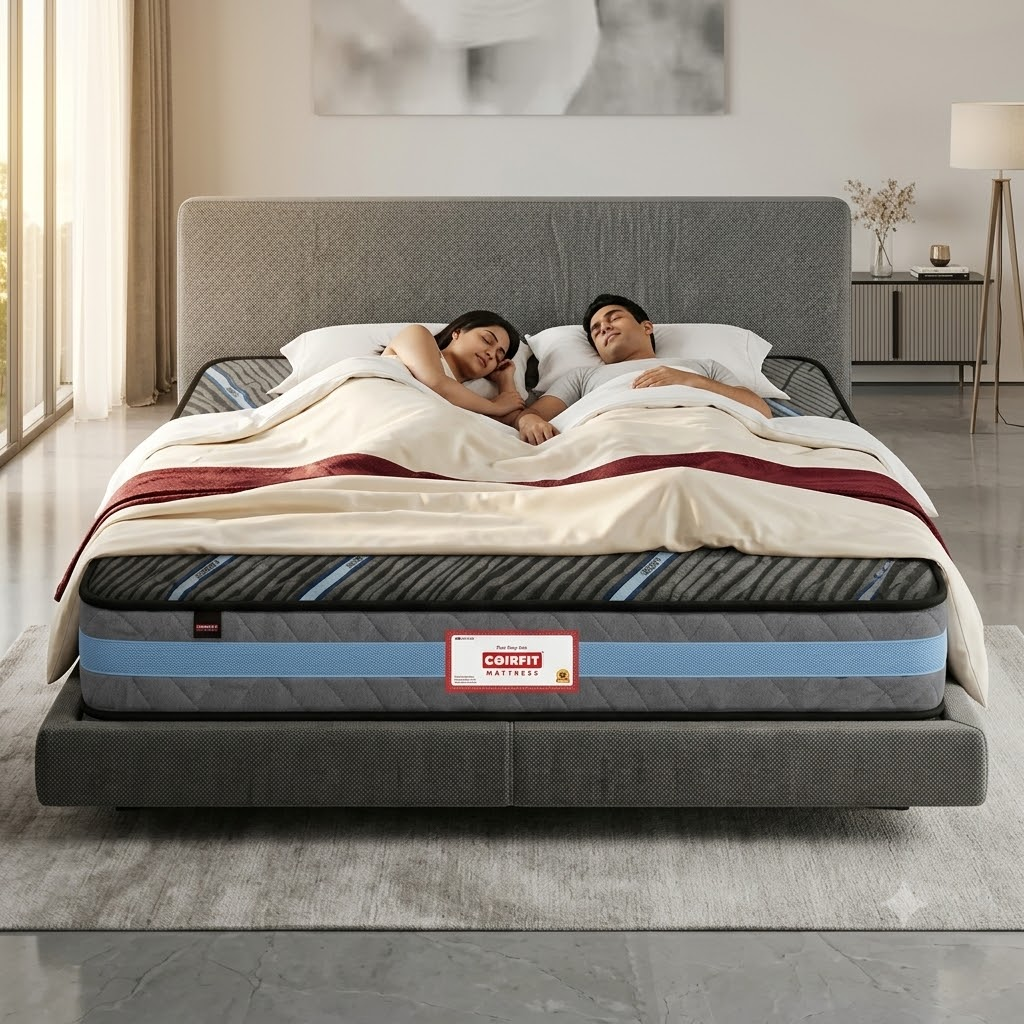
How Coirfit Approaches Memory Foam Comfort
At Coirfit, the focus isn’t simply on putting foam inside a mattress.
The performance of a mattress depends on the interaction between its materials, layers and overall construction.
Memory foam can provide a more contouring sleeping experience, making it an option for sleepers who appreciate cushioning around areas that come into greater contact with the mattress.
Coirfit’s approach to mattress comfort focuses on combining appropriate materials and construction to create sleeping surfaces designed around different comfort preferences.
That means the objective isn’t simply:
“Make it softer.”
It’s:
“Create a comfortable balance between cushioning and support.”
Because a mattress should feel comfortable when you first lie down—and continue to feel supportive as you move through the night.
How to Know if Your Mattress Is Not Providing Enough Pressure Relief
Your own experience can provide useful clues.
You might notice:
- Frequent discomfort around the shoulders or hips
- Constantly changing positions to get comfortable
- Feeling pressure in certain areas after lying down
- Waking up because one part of your body feels uncomfortable
- Difficulty relaxing on your side
- A mattress surface that feels noticeably harder than you prefer
These signs don’t automatically mean that your mattress is unsuitable.
Pillows, sleeping position, physical activity and other factors can influence how your body feels.
But if the discomfort is persistent, it’s worth reviewing your mattress and overall sleep setup.
What If Your Mattress Is Too Soft?
If your current mattress allows excessive sinking, adding a softer topper isn’t necessarily the solution.
Instead, first understand why the mattress feels uncomfortable.
It may be:
- Too soft for your body weight
- Worn out
- Losing its original support
- Unsuitable for your sleeping position
- Poorly supported underneath
A mattress that is already too soft generally needs a different support solution rather than simply adding more cushioning.

How to Choose the Right Softness for Your Mattress
Instead of asking:
“What is the softest mattress I can buy?”
Ask:
“How much cushioning do I actually need?”
That’s a much better question.
If you’re a side sleeper who likes a plush, enveloping feel, you may prefer more cushioning.
If you’re a back or stomach sleeper who prefers a stable surface, you may want a more balanced or supportive feel.
If you share your mattress with a partner, consider both people’s preferences.
And if you have a history of persistent back or joint pain, remember that a mattress isn’t a medical treatment. A healthcare professional can help determine whether your discomfort has an underlying cause that needs attention.
Does a Soft Memory Foam Mattress Reduce Pressure Points? The Bottom Line
A soft memory foam mattress can help reduce the sensation of pressure for some sleepers because memory foam can contour around the body and spread contact over a larger area.
But the word “soft” isn’t enough to determine whether a mattress will be comfortable.
The right choice depends on:
Your sleeping position + body weight + preferred firmness + mattress construction + personal comfort.
For side sleepers in particular, an appropriately cushioned memory foam surface can provide a comfortable feeling around the shoulders and hips.
For back and stomach sleepers, too much softness may not provide the stable feel they prefer.
So don’t chase softness for its own sake.
Look for balanced comfort.
That’s the approach that makes more sense when you’re choosing a mattress for everyday sleep.
Why Consider Coirfit for Memory Foam Comfort?
A mattress is more than the material you can see from the outside.
It’s the combination of the foam, support layers, construction, finishing and overall design that determines how it feels when you lie down.
Coirfit focuses on developing sleep solutions around these practical aspects of comfort.
Whether you prefer a more cushioning memory foam experience or a more responsive mattress feel, the aim is to offer options that suit different sleepers and different everyday needs.
Because your mattress should fit your sleep—not the other way around.
Comfort should feel personal.
And your mattress should give you a reason to look forward to bedtime.
Frequently Asked Questions
1. Does soft memory foam help with pressure points?
It can. Memory foam can contour around areas where the body applies more pressure, potentially spreading contact over a larger area and making the mattress feel more comfortable. The result depends on the sleeper, mattress construction, firmness and body weight.
2. Is a soft memory foam mattress good for side sleepers?
It can be a good option for side sleepers who prefer cushioning around the shoulders and hips. However, the mattress should still provide adequate underlying support and should not allow excessive sinking.
3. Is softer always better for pressure relief?
No. More softness does not automatically mean better pressure relief. A mattress that is too soft can allow excessive sinking and may not provide the stable support some sleepers prefer. The goal is a balance between cushioning and support.
4. Can memory foam help with shoulder and hip pressure?
Memory foam can contour around the body, which may make areas such as the shoulder and hip feel more comfortably cushioned, particularly for side sleepers. Individual experiences vary based on body shape, weight, sleeping position and mattress construction.
5. Is memory foam suitable for back sleepers?
Yes, memory foam can work well for back sleepers, but the appropriate firmness is important. A mattress that is excessively soft may not provide the stable feel some back sleepers prefer.
6. How do I choose the right memory foam mattress?
Consider the mattress’s firmness, memory foam quality, comfort-layer thickness, underlying support, your sleeping position, body weight and personal preference. If you experience persistent or significant pain, consult a qualified healthcare professional rather than relying on a mattress as a treatment.
The Right Mattress Isn’t the Softest One
It’s the one that feels comfortably supportive to you.
If you enjoy a cushioned, contouring sleeping experience, memory foam may be worth exploring.
And if you’re specifically looking for pressure-relieving comfort, don’t stop at the word “soft.”
Look at the entire mattress.
Look at its materials.
Look at its construction.
And most importantly, think about how your body will interact with it every night.
Coirfit — thoughtfully crafted comfort for better everyday sleep.